

Washing is an important step in producing clean, specification-ready sand and aggregate, but removing unwanted material is only part of the process. Once washing is complete, producers still need to determine how to manage the water remaining in the product and throughout the plant.
That is where aggregate dewatering equipment becomes important.
The right dewatering approach can help reduce moisture in finished material, recover fine particles, improve material handling, reduce the amount of solids sent to settling ponds, and support more efficient water management. However, there is no single dewatering solution that is right for every aggregate operation.
At NorX, we work with producers to evaluate equipment based on the material being processed, production requirements, existing plant configuration, and what the operation ultimately needs to accomplish.
Start With the Goal of Your Dewatering Process
Before selecting equipment, it is important to define the problem you are trying to solve.
Does the finished sand contain more moisture than desired? Are valuable fines being lost to the waste stream? Is settling pond maintenance becoming a burden? Does the operation need to recover more process water? Or are you looking for a single system capable of washing and dewatering material?
These applications can require very different solutions.
Factors such as feed gradation, clay and silt content, desired product specifications, water availability, plant capacity, available space, and budget can all influence equipment selection.
Understanding those conditions first helps an operation avoid selecting equipment based solely on capacity or initial cost.
Fine Material Washers: Washing, Classifying and Dewatering Sand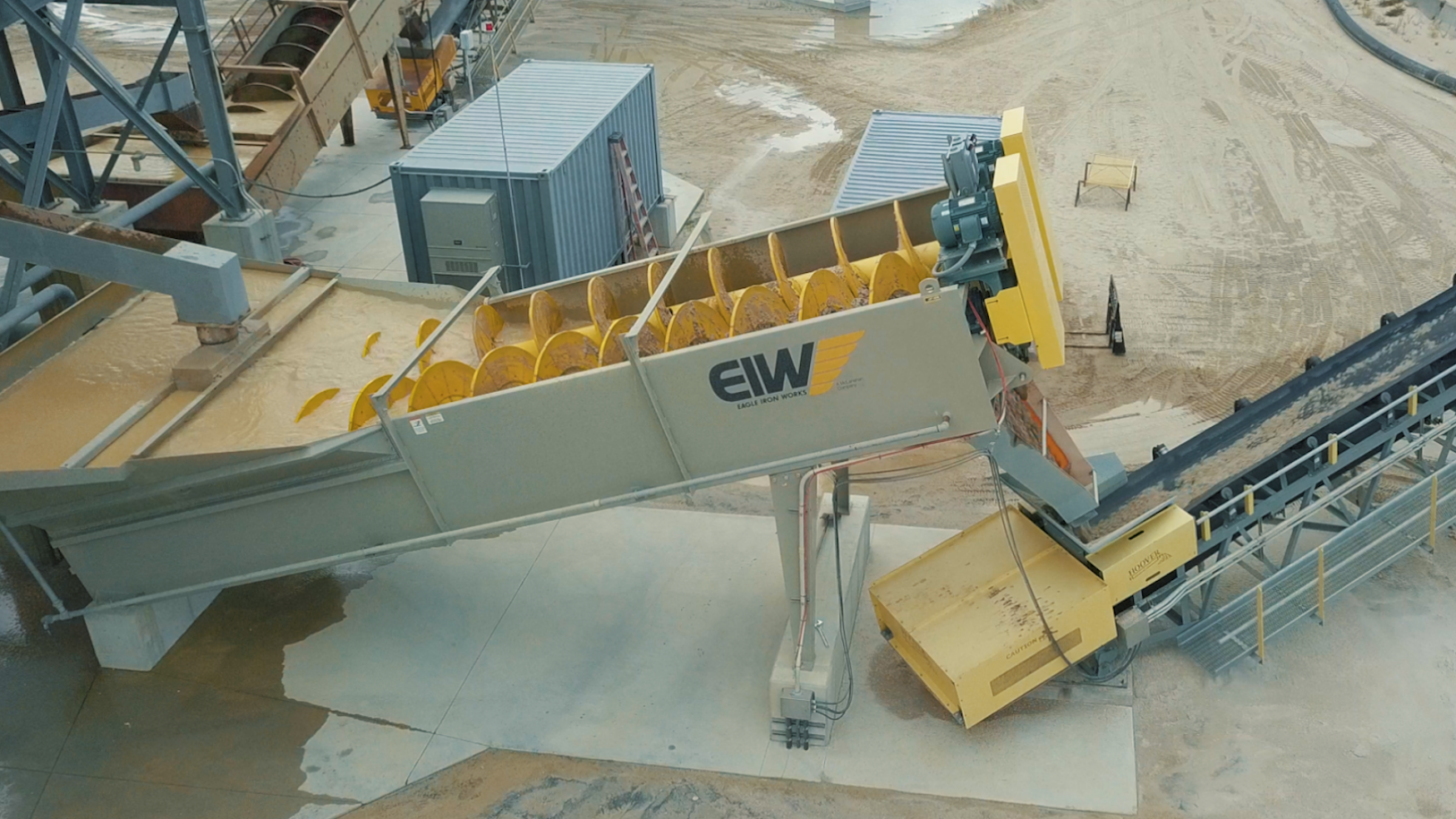
For many traditional sand and gravel applications, a Fine Material Washer, commonly called a sand screw, provides a relatively straightforward solution.
Fine Material Washers perform three related functions: washing, classifying, and dewatering. Material is agitated by the rotating screw shaft, helping remove undesirable coatings and fines, while the inclined portion of the machine allows free water to drain as the cleaned material moves toward discharge.
Their ability to perform several functions within one machine makes Fine Material Washers a practical option for many aggregate washing circuits.
However, proper setup matters. Water flow, screw speed, weir configuration, feed gradation, and operating conditions can influence how much fine material is retained or discharged with the wastewater.
For operations considering Eagle Iron Works washing equipment, NorX offers EIW Fine Material Washer options for a range of sand-processing applications.
Dewatering Screens: Reducing Moisture After Washing
When the primary objective is to produce a drier, easier-to-handle material after washing, a dewatering screen may be the appropriate solution.
Dewatering screens use vibration and screen media to separate water from solids. As material moves across the deck, water passes through the screen while the solids continue toward discharge.
These screens can be incorporated after washing equipment to further reduce moisture in sand and aggregate.
Lower product moisture can make material easier to convey, stockpile, load, and transport. It may also reduce the amount of water carried into a stockpile and help finished material become ready for handling sooner.
The correct screen configuration is important. Feed characteristics, particle size, desired moisture level, and throughput all need to be considered when sizing and selecting dewatering equipment.
Fines Recovery: Capture Material Before It Reaches the Pond
Not every valuable particle stays with the finished product during washing. Fine material can remain suspended in process water and leave the primary washing circuit.
A fines recovery system provides an opportunity to capture a portion of that material before it reaches a settling pond or moves farther into the wastewater process.
These systems commonly combine a sump, pump, hydrocyclone and dewatering screen. Slurry is pumped to the hydrocyclone, where fine solids are separated from the water stream. The recovered material can then be discharged onto a dewatering screen for additional moisture removal.
This approach can help producers recover material that might otherwise be lost while reducing the amount of solids reporting to settling ponds.
Complete Sand Plants: Combine Multiple Processing Steps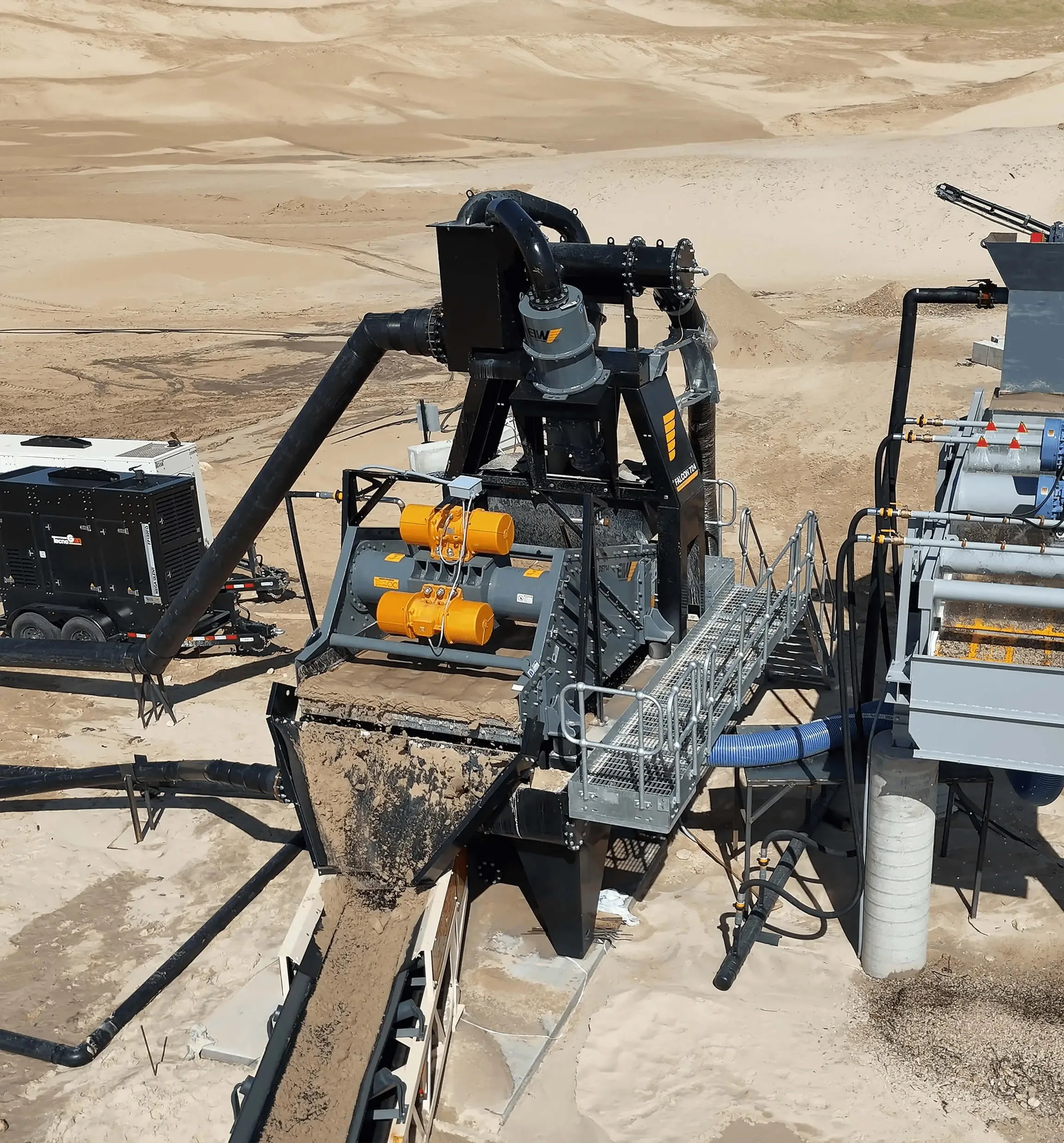
In some applications, adding one machine to an existing circuit is not the most effective approach.
A more integrated sand washing plant can combine several stages of processing within a coordinated system. Depending on the design, these systems can incorporate a sump, pump, hydrocyclones and dewatering screens to wash, separate and dewater sand.
This can be particularly useful when designing a new plant or making significant changes to an existing washing circuit.
Rather than evaluating each piece of equipment independently, producers can consider how material and water move through the entire system. That plant-wide perspective can help identify opportunities to improve material recovery, finished product quality and water management.
When Water Recovery Becomes the Priority
Some operations face challenges that extend beyond producing a drier aggregate product.
Limited water availability, restrictions on pond space, large volumes of slurry, or a need to reduce waste can make water recovery and tailings management a larger part of the plant design.
In these situations, equipment such as thickeners and filter presses may become part of the conversation.
A filter press separates solids from liquids by pumping slurry into chambers containing filter cloths. Solids accumulate to form dewatered cakes while filtered water exits the system. Once a cycle is complete, the press opens so the solid cakes can be discharged.
Filter presses can achieve significant water recovery and produce substantially dewatered solids, making them useful when reducing slurry volume and recovering process water are priorities. They also represent a different level of investment and operation than a conventional sand screw or dewatering screen, so the goals of the plant should justify that additional complexity.
Think About Water Management as a System
One of the most important considerations in aggregate dewatering is that each piece of equipment affects what happens downstream.
For example, recovering fines before wastewater reaches a settling pond can reduce the amount of solids the pond must handle. Removing additional water from a finished sand product can improve stockpile conditions. Separating solids before downstream water-treatment equipment may change the load placed on that equipment.
For this reason, dewatering equipment should be evaluated as part of the complete aggregate washing process, not simply as an isolated machine.
A system may incorporate more than one technology, with each performing a specific job at a different point in the process.
Questions to Ask Before Selecting Dewatering Equipment
Before investing in new aggregate washing or dewatering equipment, producers should have a clear picture of their current process and desired outcome. Consider questions such as:
- What material and particle-size range are we processing?
- How much water is entering the system?
- What moisture level do we want in the finished product?
- Are saleable fines currently being lost?
- How much material is being sent to settling ponds?
- Is water availability a concern?
- Do we need washing, classification and dewatering or primarily moisture reduction?
- How will new equipment integrate with the existing plant?
- What production capacity does the system need to support?
Answering these questions can narrow the range of suitable equipment and help determine whether a standalone machine or a more comprehensive system makes sense.
Choosing the Right Dewatering Solution
The right dewatering equipment depends on more than production capacity alone. Material characteristics, desired product moisture, fines content, water availability, existing plant configuration, and overall processing goals should all factor into the decision.
Whether an operation requires a Fine Material Washer, dewatering screen, fines recovery system, or a more comprehensive water management solution, evaluating the entire process can help ensure the equipment is properly matched to the application.
If you are considering new or upgraded aggregate washing and dewatering equipment, contact NorX to discuss your application and available equipment options.