

Choosing the right rock crusher is an important part of designing an efficient aggregate processing operation. Two of the most common types of crushing equipment are jaw crushers and cone crushers, but they typically perform very different jobs within a crushing circuit.
While both use compression to reduce material, differences in their design, feed requirements and typical position in the crushing process make each better suited to certain applications.
Understanding the difference between a jaw crusher and a cone crusher can help producers select equipment that supports their desired capacity, product size and overall plant performance.
How Does a Jaw Crusher Work?
A jaw crusher reduces material by compressing it between two jaw surfaces. One jaw remains stationary while the other moves, repeatedly applying force to the material until it becomes small enough to exit the crushing chamber.
Jaw crushers are most commonly used as primary crushers. At this stage of the process, the goal is generally to accept relatively large feed material and reduce it to a size that can be conveyed or processed by downstream equipment.
Their ability to handle large feed sizes makes jaw crushers a common choice in aggregate production, quarrying, mining and recycling applications.
How Does a Cone Crusher Work?
A cone crusher also uses compression, but its crushing action is different from that of a jaw crusher.
Material enters the crushing chamber and is compressed between a moving mantle and a stationary concave or bowl liner. As material travels through the chamber, it is progressively reduced until it is small enough to discharge from the crusher.
Cone crushers are most commonly found in secondary, tertiary and quaternary crushing stages. They are particularly well suited for further reducing material that has already passed through a primary crusher.
Because of their position within the crushing circuit, cone crushers can play an important role in achieving the required product size and shape.
Jaw Crusher vs. Cone Crusher: What’s the Difference?
The biggest difference between a jaw crusher and a cone crusher is usually the role each machine performs within the crushing process.
A jaw crusher is generally designed to handle larger feed and perform the initial stage of size reduction. A cone crusher typically receives smaller material and continues reducing it toward the desired finished-product specifications.
In a multi-stage aggregate plant, the two machines may therefore work together rather than compete for the same application.
Material may first pass through a jaw crusher for primary reduction before being conveyed to a cone crusher for secondary or tertiary crushing.
When Should You Use a Jaw Crusher?
A jaw crusher may be the appropriate choice when an application requires a machine capable of accepting relatively large material and performing primary size reduction.
Factors that can make a jaw crusher a good fit include:
- Large feed material
- Primary crushing requirements
- Hard or abrasive rock
- Applications requiring a straightforward first stage of reduction
- Mobile or stationary primary crushing configurations
Feed opening, desired capacity, material characteristics, and required discharge size all need to be considered when selecting a specific jaw crusher.
A jaw crusher should also be properly sized for the rest of the plant. Selecting a primary crusher based only on its ability to accept the largest feed can create problems if downstream equipment cannot efficiently handle its production.
When Should You Use a Cone Crusher?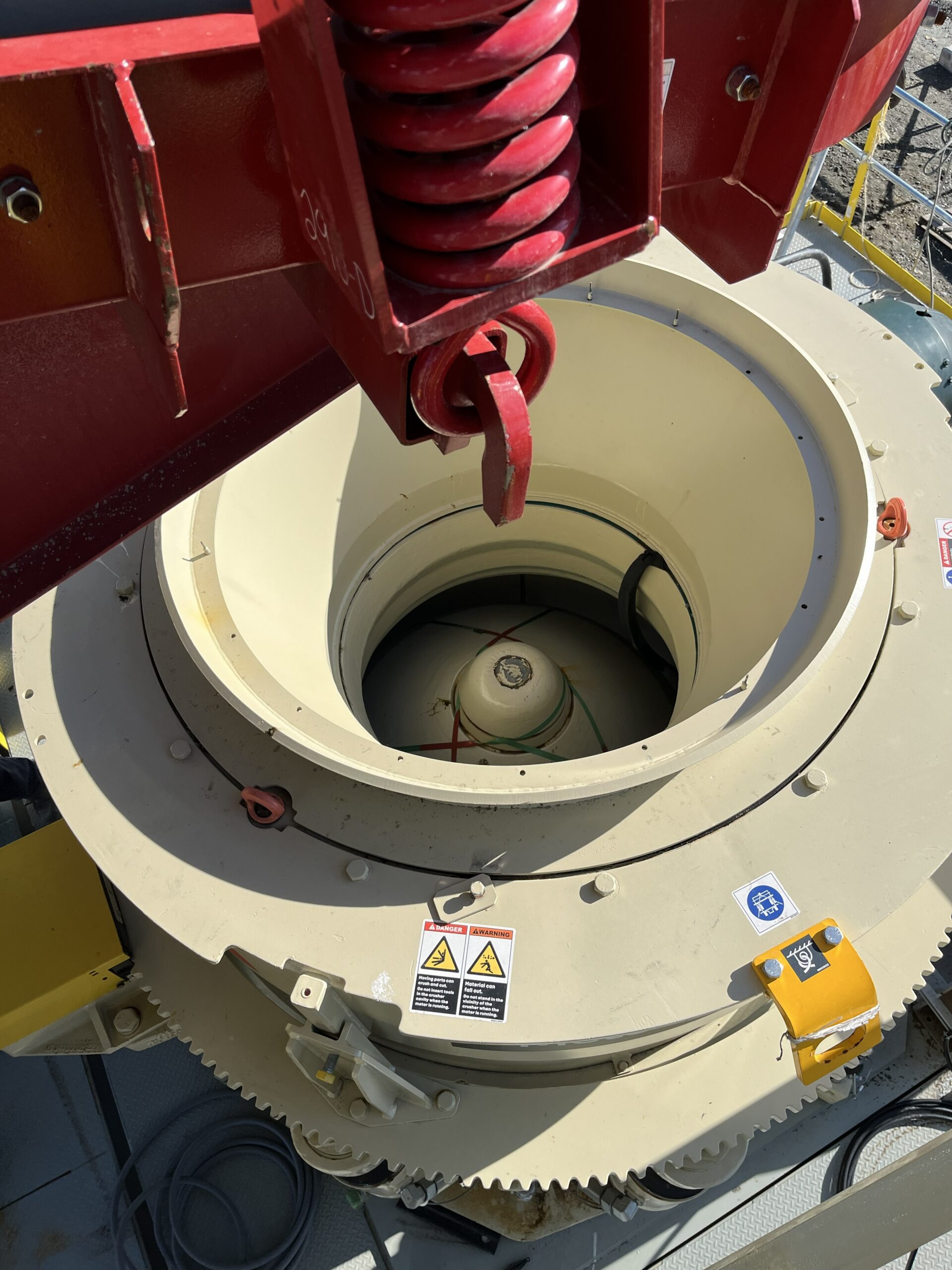
Cone crushers are generally selected when an operation needs additional size reduction after the primary crushing stage.
They are commonly used for:
- Secondary crushing
- Tertiary crushing
- Quaternary or fine crushing
- Hard and abrasive materials
- Producing more closely controlled aggregate sizes
- Further reducing and shaping material downstream in a crushing circuit
The correct cone crusher configuration depends on more than the crusher model itself. Feed size and gradation, crushing chamber selection, closed-side setting, material characteristics and desired product specifications can all influence performance.
Providing a cone crusher with a consistent and appropriate feed is also important to maintaining efficient operation and producing a consistent end product.
Can a Cone Crusher Be Used as a Primary Crusher?
Although cone crushers are primarily associated with secondary and later crushing stages, there are applications in which a cone crusher can operate in the first stage of crushing.
This is generally possible when the natural feed size is already small enough that a traditional primary crushing stage is unnecessary.
For most conventional aggregate applications involving larger feed material, however, jaw crushers and other primary crushing technologies are better suited to the initial reduction stage.
Do You Need Both a Jaw Crusher and a Cone Crusher?
In many aggregate operations, the answer is yes.
A jaw crusher and cone crusher can complement one another in a multi-stage crushing circuit.
For example:
Primary Stage: A jaw crusher accepts larger feed material and reduces it to a manageable size.
Secondary Stage: A cone crusher receives the primary-crushed material and reduces it further.
Tertiary Stage: Depending on the required products and plant design, additional crushing and screening equipment may further process the material.
The best configuration depends on the material being processed and the products the operation needs to produce. Not every application requires the same number of crushing stages.
Factors to Consider When Choosing a Rock Crusher
Choosing between a jaw crusher, cone crusher or another type of crushing equipment should begin with the requirements of the application rather than the machine itself.
Important considerations include:
Feed Size
How large is the material entering the crusher?
Large feed sizes generally require equipment designed for primary crushing, while smaller feed may be suitable for secondary or tertiary equipment.
Material Characteristics
Rock hardness, abrasiveness, moisture and other material properties can affect crusher selection, wear rates and overall performance.
Required Capacity
The crusher must be capable of supporting the operation’s production requirements without creating a bottleneck elsewhere in the plant.
Desired Product Size
Consider both the size of the incoming material and the required finished product. The reduction needed between those two points helps determine the appropriate crushing stages.
Existing Equipment
Crusher selection should not happen in isolation. Screens, feeders, conveyors and other crushers all influence how effectively the complete plant operates.
Mobility Requirements
Both jaw and cone crushers are available in various stationary, portable and mobile configurations. The appropriate setup depends on how and where the equipment will be used.
Crusher Selection Is About the Entire Circuit
One of the most important things to remember when comparing jaw crushers vs. cone crushers is that crusher selection is rarely about choosing one machine in isolation.
A crusher that performs well individually can still create problems if it is not properly matched to the equipment before and after it.
Feed characteristics, production targets, screening capacity, conveyor capacity, recirculating loads and desired final products all influence the design of an efficient crushing circuit.
Looking at the entire process can help producers avoid bottlenecks and select equipment that works together effectively.
Find the Right Crushing Equipment for Your Operation
There isn’t one rock crusher that is best for every application.
Jaw crushers are commonly used for primary crushing and handling larger feed, while cone crushers typically provide additional reduction in secondary and later crushing stages. In many operations, both are important components of the same crushing and screening circuit.
NorX works with aggregate producers to identify crushing and screening equipment suited to their material, production requirements and overall operation.
Whether you’re replacing an existing crusher, adding another stage to your plant or evaluating equipment for a new application, understanding the entire process is an important first step toward choosing the right solution.
Contact NorX to discuss your crushing application and equipment needs.