

When designing or upgrading a wash plant, selecting the right equipment is critical to achieving the desired product quality, production efficiency, and operational profitability. Two pieces of equipment commonly used in aggregate washing applications are screw washers and log washers. While they may appear similar at first glance, they serve very different purposes within a processing circuit.
Understanding the differences between these machines can help producers make informed decisions when evaluating washing solutions for their operation.
In this article, we’ll compare Eagle Iron Works screw washers and Eagle Iron Works log washers, including how they work, their ideal applications, and how to determine which is the best fit for your material.
Understanding the Purpose of Aggregate Washing
Before comparing the equipment, it’s important to understand why washing is necessary in aggregate production.
Natural and crushed aggregates often contain unwanted materials such as:
- Clay
- Silt
- Dirt
- Lightweight contaminants
- Organic matter
- Soft or deleterious particles
Removing these impurities helps producers meet specification requirements, improve product quality, and maximize the value of their finished materials.
The type and severity of contamination often determine whether a screw washer or log washer is the appropriate solution.
What Is a Screw Washer?
A screw washer, sometimes called a coarse material washer, uses rotating shafts with helical flights to wash, scrub, and dewater aggregate material.
As material enters the machine, water and rotating screws work together to separate undesirable fines from the aggregate. The screws move the cleaned material upward through the machine while wash water and fine contaminants overflow the discharge weirs.
Eagle Iron Works offers both single-shaft and twin-shaft screw washer configurations designed to handle a variety of aggregate washing applications.
Common Applications for Screw Washers
Screw washers are typically used for:
- Natural gravel washing
- Crushed stone washing
- Concrete aggregate production
- Sand and gravel operations
- Removal of light clay contamination
- Dewatering coarse aggregate
They are particularly effective when material contains minor amounts of clay, silt, or fines that can be removed through washing and agitation.
What Is a Log Washer?
A log washer is designed for a much more aggressive washing and scrubbing process.
Rather than simply washing material, Eagle Iron Works log washers utilize heavy-duty paddles mounted on rotating shafts that violently scrub and abrade the material against itself. This action breaks apart tough clay lumps, sticky deposits, and other difficult contaminants that cannot be removed through conventional washing alone.
The intense scrubbing action makes log washers ideal for applications involving heavily contaminated material.
Common Applications for Log Washers
Log washers are commonly used for:
- Clay-bound aggregates
- Dirty limestone
- Recycled aggregate processing
- Heavy clay contamination
- Tough mud and shale removal
- Construction aggregate preparation
When aggregate contains significant amounts of sticky clay or compacted contaminants, a log washer often becomes the preferred solution.
The Biggest Difference: Washing vs. Scrubbing
The primary distinction between screw washers and log washers comes down to the level of cleaning required.
Screw Washers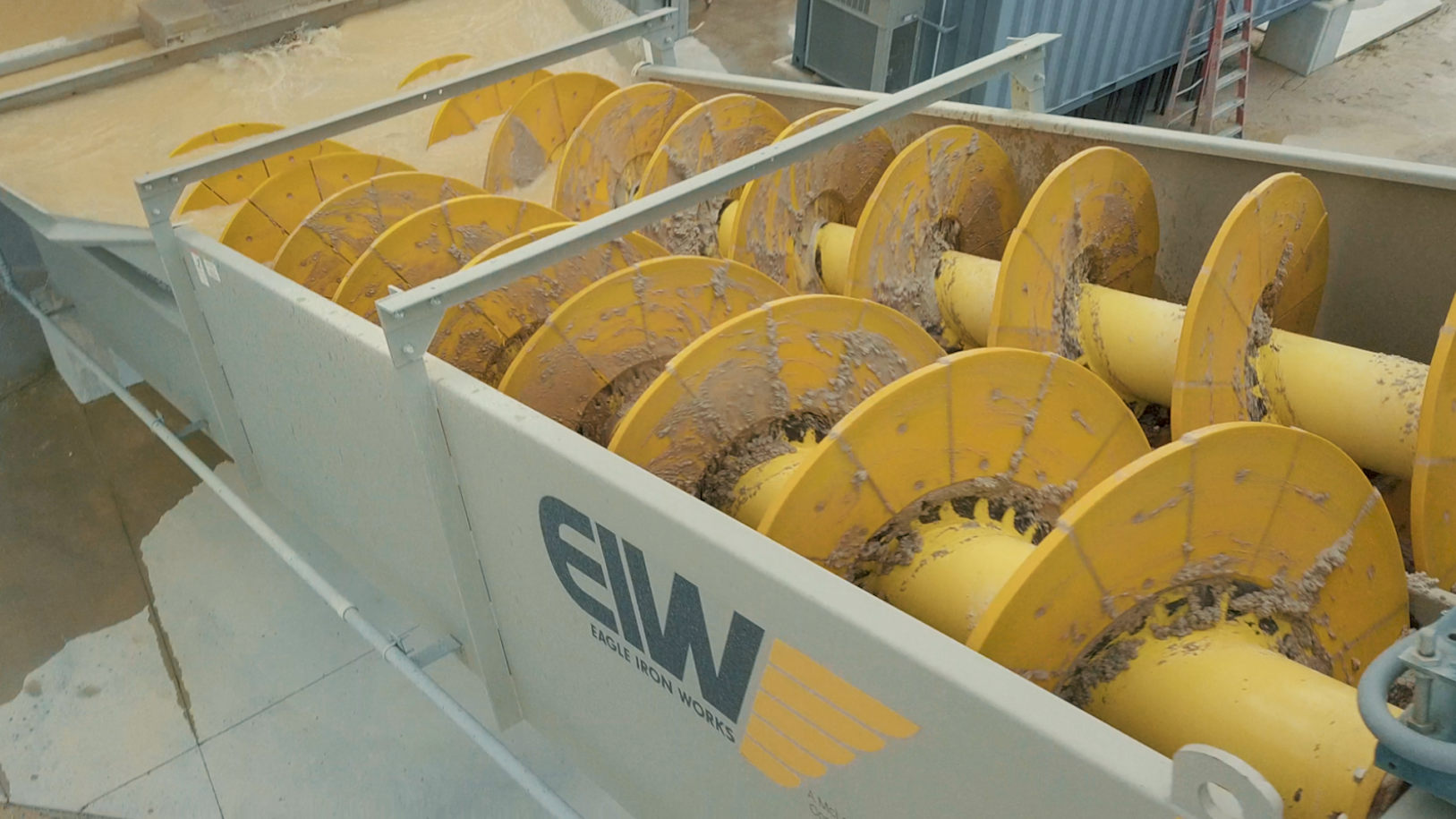
Screw washers are designed primarily to:
- Wash aggregate
- Remove lightweight contaminants
- Separate fine particles
- Dewater material
- Improve overall cleanliness
Log Washers
Log washers are designed primarily to:
- Scrub heavily contaminated material
- Break apart clay balls
- Remove compacted mud
- Separate difficult impurities
- Prepare material for further processing
In simple terms, screw washers wash material, while log washers aggressively scrub material.
Material Conditions Matter
The condition of the feed material is often the deciding factor when selecting equipment.
Choose a Screw Washer When:
- Material is relatively clean
- Clay contamination is minimal
- Fines removal is the primary objective
- Aggregate requires dewatering
- Production efficiency is a priority
Choose a Log Washer When:
- Material contains large clay deposits
- Sticky contamination is present
- Clay balls must be broken apart
- Feed material is heavily weathered
- Superior scrubbing action is required
Installing a screw washer where a log washer is needed can lead to poor product quality and ongoing operational challenges.
Production and Maintenance Considerations
Both machines are designed for demanding aggregate environments, but their operating characteristics differ.
Screw washers generally consume less horsepower and experience lower wear rates because they rely on washing and conveying action rather than intensive scrubbing.
Log washers, by comparison, require more power and experience greater wear due to the aggressive nature of the scrubbing process. However, this increased energy usage is often justified when processing difficult materials that cannot be cleaned effectively by other means.
Selecting the proper machine helps balance operating costs with product quality requirements.
Can Screw Washers and Log Washers Work Together?
Absolutely.
Many modern aggregate plants incorporate both technologies within the same processing circuit.
For example, a log washer may first scrub heavily contaminated material to break apart clay and mud deposits. The material can then be routed to a screw washer for final washing, classification, and dewatering.
This combination allows producers to maximize cleanliness while maintaining efficient processing.
Why Producers Trust Eagle Iron Works Washing Equipment
For decades, Eagle Iron Works has built a reputation for producing durable, reliable washing equipment for the aggregate industry.
Their screw washers and log washers are engineered to withstand demanding operating conditions while delivering consistent product quality and dependable performance.
Whether processing natural sand and gravel deposits or tackling heavily contaminated aggregate sources, Eagle Iron Works offers solutions designed to meet the challenges of modern production environments.
Which Solution Is Right for Your Operation?
There is no one-size-fits-all answer when comparing screw washers and log washers.
If your operation primarily needs aggregate washing, fines removal, and dewatering, an Eagle Iron Works screw washer may be the ideal solution.
If you’re battling stubborn clay contamination, clay balls, or heavily weathered material, an Eagle Iron Works log washer will likely provide the aggressive scrubbing action required to meet specifications.
The key is evaluating your feed material, desired end product, and production goals before selecting equipment.
Let NorX Help You Find the Right Washing Solution
Choosing the correct washing equipment can significantly impact product quality, plant efficiency, and long-term profitability. At NorX, our team works closely with aggregate producers to evaluate material conditions and recommend solutions that align with their operational objectives.
Contact NorX today to learn more about Eagle Iron Works washing equipment and discover how the right solution can improve your operation’s performance.